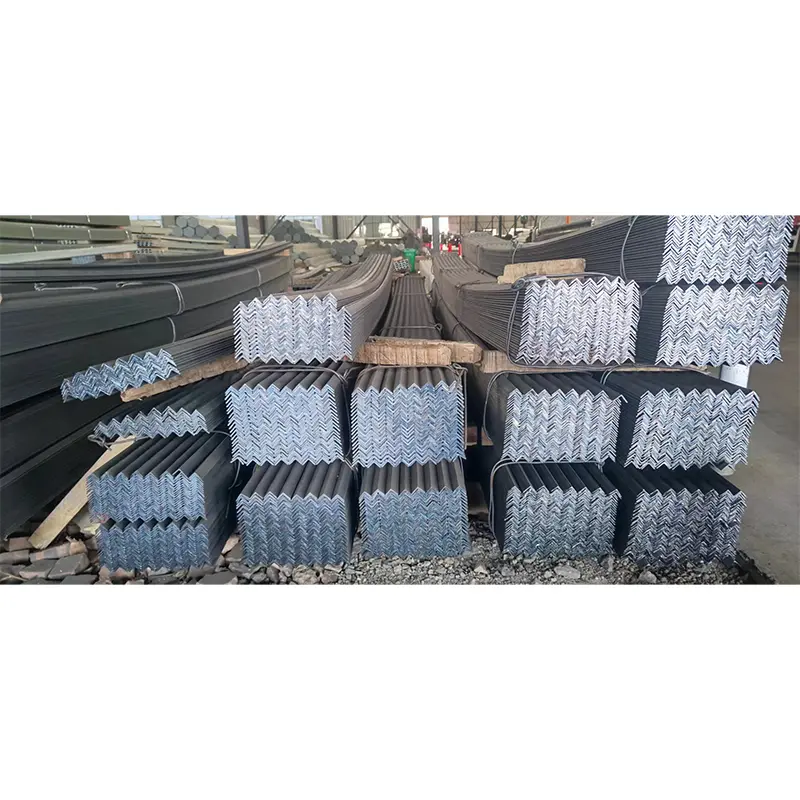
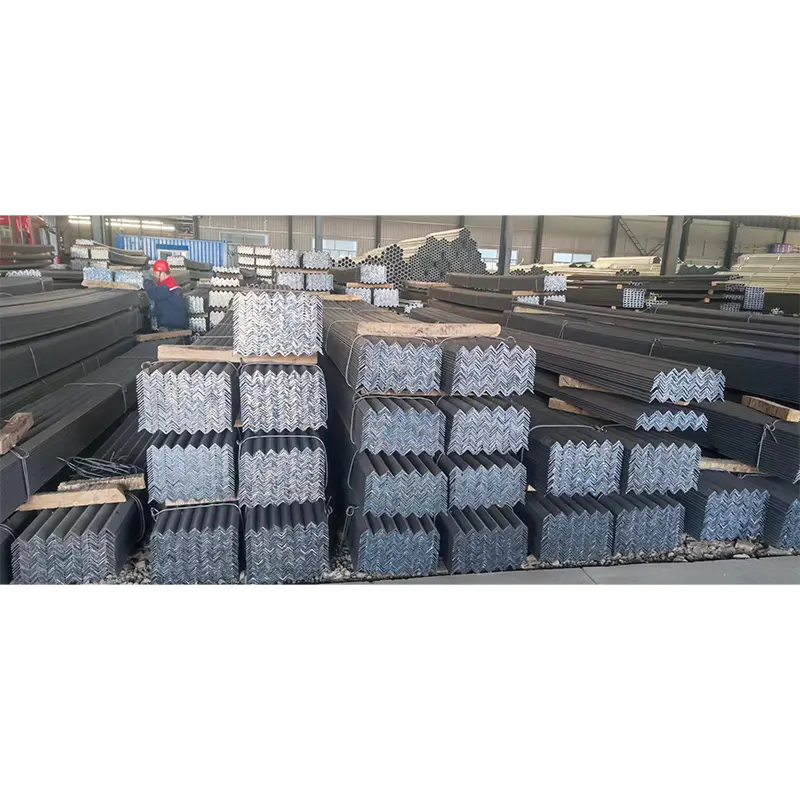
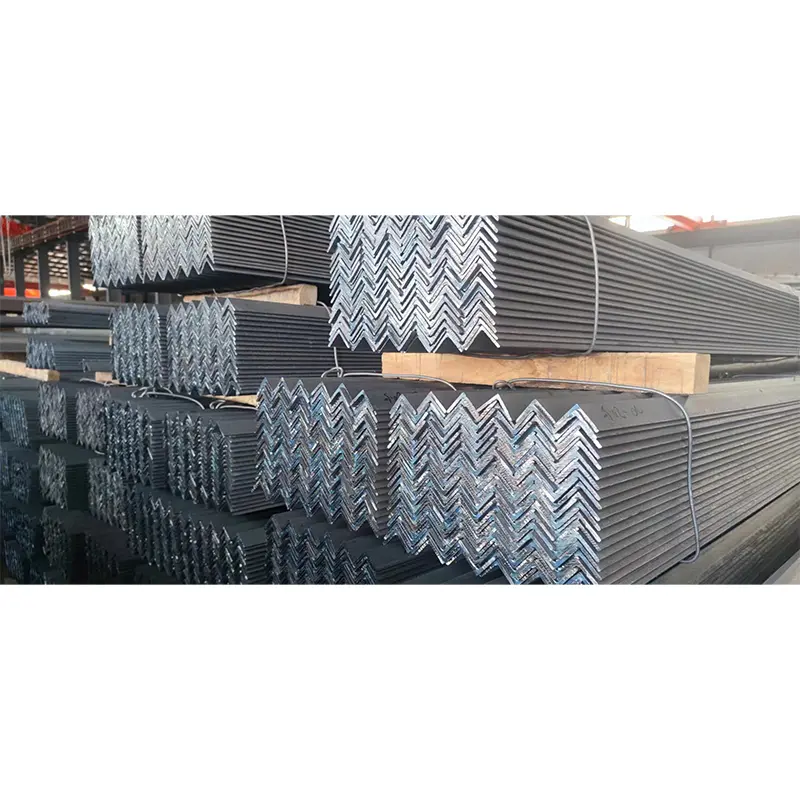
Black Angle Steel Bar
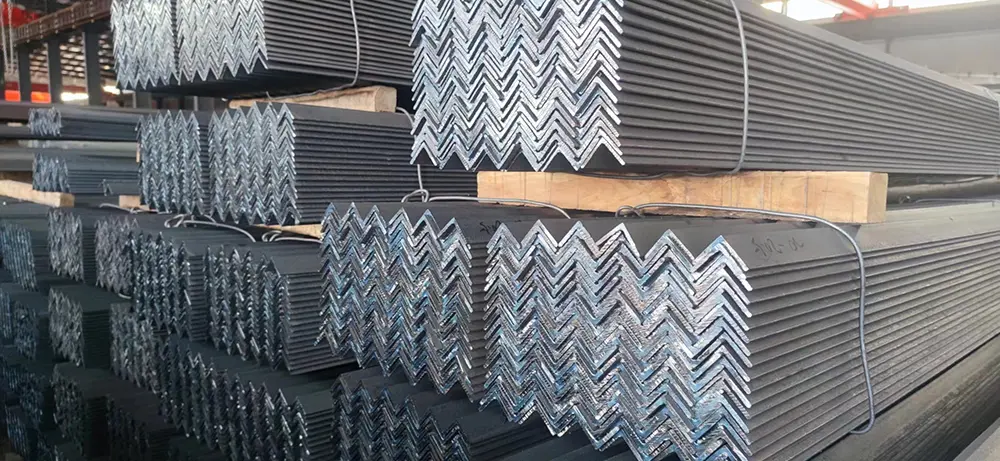
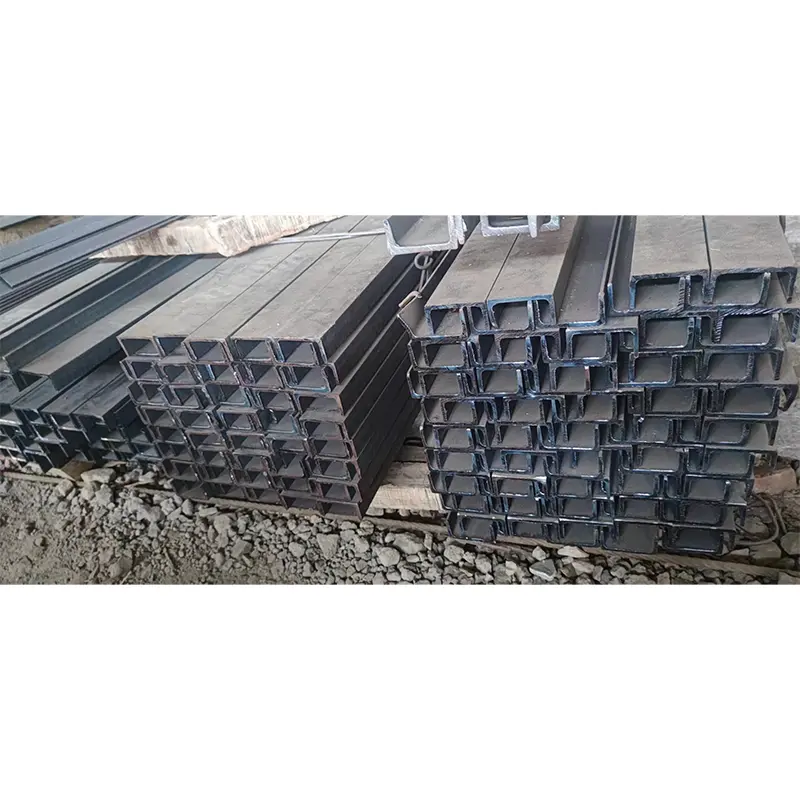
Black Angle Steel Bar is a hot rolled steel angle profile produced from Q235B, Q355B, and other carbon steel grades, supplied in its original mill finish condition. Formed through high-temperature rolling, it features a dense steel structure, dependable strength, and excellent weldability for various fabrication processes. With flexible sizing options and cost advantages, it is commonly used in general steel fabrication, machinery bases, support structures, and engineering projects requiring further processing or customized surface treatment.
Black Angle Steel Bar is manufactured by hot rolling carbon steel billets into angle-shaped profiles, creating a stable internal structure and consistent mechanical properties throughout the section. The natural dark surface appearance comes from the oxide scale formed during the rolling process, representing the original condition of the steel without additional galvanizing, painting, or coating operations.
This untreated surface allows customers to perform subsequent operations such as cutting, welding, drilling, machining, painting, or other protective treatments based on specific project requirements. Designed with both equal angle and unequal angle options, Black Angle Steel Bar provides efficient material utilization, good processing adaptability, and reliable structural performance for steel fabrication, equipment manufacturing, framework construction, and industrial applications where flexibility and cost control are important.
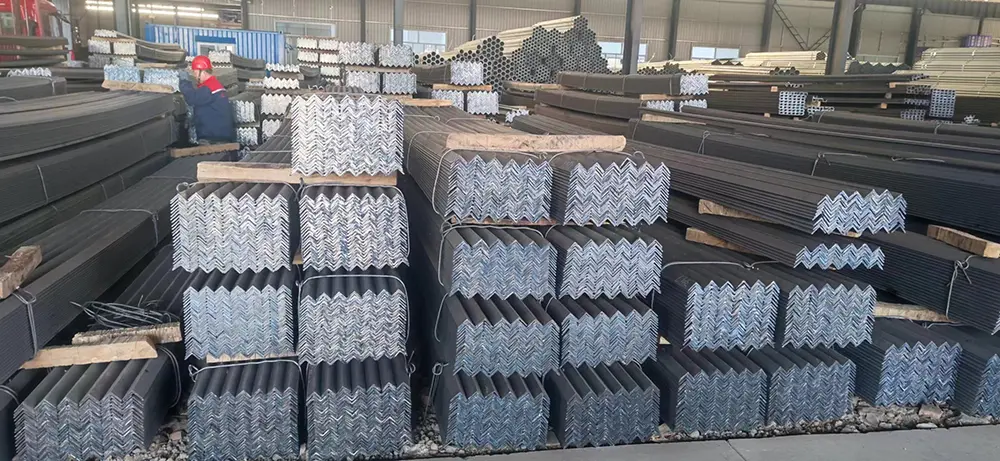
Material Characteristics and Product Structure
Black Angle Steel Bar is produced through a direct hot rolling process that forms the steel into an L-shaped cross-section. During the rolling process, a stable black oxide layer naturally develops on the surface, giving the product its characteristic appearance.
The product is mainly divided into two structural types. Equal Angle Steel has identical side widths, providing balanced load distribution and broad application flexibility. Unequal Angle Steel has different side widths, allowing engineers to optimize structural performance in special installation spaces or uneven loading conditions.
Because there is no additional surface coating, the product maintains excellent welding performance, machining capability, and customization flexibility. Users can later apply painting, hot dip galvanizing, powder coating, or other protective treatments according to the final working environment.
Manufacturing Process
1. Hot Rolling Forming Process
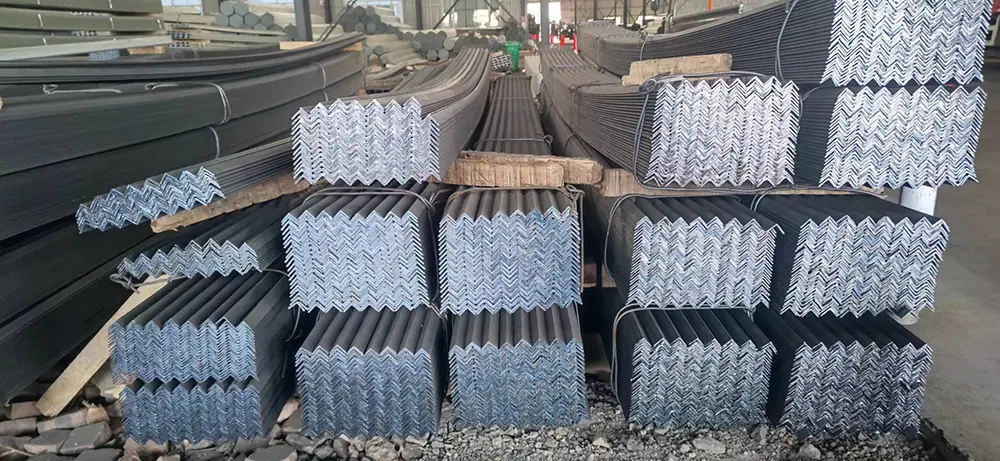
High-quality steel billets are inspected before being heated to a high temperature. The softened billets then pass through multiple rolling stages to gradually form the required angle profile. This process creates a dense internal structure with stable mechanical properties.
2. Straightening and Size Control
After rolling, the angle steel undergoes straightening to improve dimensional accuracy and overall flatness. The products are then cut according to standard lengths or customized requirements.
3. Final Quality Inspection
Finished Black Angle Steel Bar is inspected for dimensions, surface condition, chemical composition, and mechanical properties. Products meeting quality requirements are classified and stored for shipment.
Technical Specifications
|
Item |
Specification |
|
Product Name |
Black Angle Steel Bar |
|
Material Grade |
Q235B, Q355B |
|
Product Type |
Equal Angle Steel / Unequal Angle Steel |
|
Manufacturing Process |
Hot Rolled |
|
Standard Equal Angle Size |
20×20mm to 200×200mm |
|
Thickness Range |
3mm–20mm |
|
Length |
6m, 9m, 12m or Customized Length |
|
Surface Condition |
Natural Black Oxide Scale |
|
Coating Treatment |
None (Optional Painting/Galvanizing Available) |
|
Production Standard |
GB/T 706-2016 |
|
Fabrication Capability |
Cutting, Welding, Drilling, Bending, Grinding |
|
Application Environment |
Indoor, Dry, Protected Structures |
|
Weight Formula |
kg/m = 0.00785 × Thickness × (2 × Side Width − Thickness) |
Key Performance Advantages
1. Reliable Structural Strength
Black Angle Steel Bar maintains the original mechanical properties of hot rolled steel. Its dense structure provides excellent resistance to bending, compression, and twisting, making it suitable for various load-bearing structures and support systems.
2. Cost-Effective Structural Solution
Without additional galvanizing or coating procedures, Black Angle Steel Bar offers a more economical option compared with corrosion-protected steel profiles. It is especially suitable for large-volume projects where surface treatment can be completed separately according to actual requirements.
3. Excellent Fabrication Performance
The uniform steel structure allows easy cutting, drilling, welding, grinding, and machining. This makes it convenient for on-site modification and customized fabrication during construction or equipment manufacturing.
4. Flexible Surface Treatment Options
Because the surface remains untreated, customers can select different protection methods after fabrication, including painting, hot dip galvanizing, powder coating, or other anti-corrosion processes based on environmental requirements.
5. Wide Application Compatibility
The standardized L-shaped profile allows easy connection with other steel components. It can be used for brackets, frames, supports, reinforcement structures, and customized steel assemblies.
Typical Applications
1. Indoor Steel Structure Projects
Black Angle Steel Bar is widely used in factory interiors, building reinforcement components, indoor steel frames, connection structures, and non-exposed construction supports where corrosion protection requirements are limited.
2. Equipment and Pipeline Supports
It is commonly applied in machinery bases, industrial equipment frames, HVAC supports, indoor pipeline brackets, and auxiliary structures because of its excellent strength and easy fabrication.
3. Mechanical Manufacturing
Manufacturers use black angle steel for machine frames, fixing brackets, connecting components, fabrication blanks, and other mechanical structures requiring reliable steel performance.
4. Temporary Construction Facilities
Due to its low cost and convenient processing, it is suitable for temporary supports, construction barriers, temporary platforms, and short-term engineering structures.
5. Steel Processing and Fabrication
Black Angle Steel Bar is often used as a raw material for secondary processing. It can be transformed into galvanized components, painted structures, welded assemblies, and customized steel products.
Equal Angle Steel and Unequal Angle Steel Selection
1. Equal Angle Steel
Equal Angle Steel provides balanced strength because both sides have the same width. It is commonly selected for general structural frames, equipment supports, brackets, and standard fabrication projects.
2. Unequal Angle Steel
Unequal Angle Steel is designed for special structural requirements where different side lengths improve space utilization or load distribution. It is suitable for customized structures, offset loading conditions, and limited installation spaces.
Product Comparison
1. Black Angle Steel Bar vs Galvanized Angle Steel Bar
Black Angle Steel Bar is more economical and flexible for projects requiring later surface treatment. It is suitable for indoor dry environments and applications where customers can control corrosion protection themselves. Galvanized Angle Steel Bar provides built-in corrosion resistance and is preferred for outdoor, humid, and coastal applications.
2. Black Angle Steel Bar vs Cold Galvanized Angle Steel Bar
Black Angle Steel maintains the original steel structure and allows various surface treatments. Cold galvanized angle steel only provides a thin surface zinc layer, which may have limited durability under long-term outdoor exposure.
3. Equal Angle Steel vs Unequal Angle Steel
Equal Angle Steel is mainly used for balanced loading structures, while Unequal Angle Steel provides greater flexibility for special engineering designs requiring different side dimensions.
International Application Case Study
1. Industrial Warehouse Expansion Project in Southeast Asia
A manufacturing company in Southeast Asia selected Black Angle Steel Bar for the internal framework expansion of a production warehouse.
The project required a cost-effective structural material for indoor platforms, equipment supports, and auxiliary steel frames. Since the warehouse environment was dry and protected from direct weather exposure, untreated black angle steel provided sufficient structural performance while reducing material costs.
The steel profiles were processed through cutting, welding, and assembly on-site, allowing the contractor to complete customized support structures efficiently. The project demonstrated the advantage of Black Angle Steel Bar as a practical solution for large-scale indoor industrial construction.
Selection Guide
1. Choosing the Right Material Grade
Q235B is suitable for general structural applications, indoor supports, and standard fabrication projects. Q355B is recommended for heavier structures requiring higher strength and improved load-bearing capability.
2. Selecting the Proper Size
Small angle sizes are generally used for lightweight supports and brackets, while larger dimensions and thicker sections are selected for heavy-duty frames and structural applications.
3. Considering the Working Environment
Black Angle Steel Bar is recommended for dry indoor environments or projects with planned secondary protection. For outdoor, coastal, humid, or corrosive environments, additional galvanizing or coating treatment should be considered.
4. Quality Inspection Requirements
Before installation, users should verify material certificates, dimensions, mechanical properties, and compliance with GB/T 706-2016 standards to ensure structural reliability.
FAQ
1. What is Black Angle Steel Bar?
Black Angle Steel Bar is a hot rolled L-shaped steel profile made from carbon steel such as Q235B and Q355B. Its surface retains the natural black oxide scale formed during rolling without additional coating treatment.
2. Is the black surface of angle steel rust?
No. The black surface is a natural oxide layer created during high-temperature rolling. It is not a quality defect and does not affect the mechanical performance of the steel.
3. Can Black Angle Steel Bar be used outdoors?
Black Angle Steel Bar can be used outdoors after applying suitable anti-corrosion treatment. Without additional protection, it is mainly recommended for indoor or dry environments.
4. What is the difference between equal and unequal angle steel?
Equal angle steel has two sides with the same width and is widely used for standard structures. Unequal angle steel has different side dimensions and is mainly used for special load conditions or customized structural designs.
Send Inquiry
Contact Info
-
Address
300 meters east of the intersection of Tuanda Line and Cuitang Road, Daqiuzhuang Town, Jinghai District, Tianjin City, China
-
Tel
-
Email
If you have any inquiry about a quotation or cooperation, please feel free to email or use the following inquiry form. Our sales representative will contact you within 24 hours.
News Recommendations